Orange Peel and Rosemary Stove Fragrance Easy Diy


Growing up, we didn't have a lot of extra money. My parents were frugal before frugal was cool, and it meant that a lot of the "stuff" I saw advertised on the three fuzzy channels we got on our TV never made it in our house. I remember seeing commercials for plug-in air fresheners, and my weird kid mind thought that was just the coolest thing ever!
I begged my Mom to get one, and she just smiled in the gentle way my Mama does, and instead grabbed a small saucepan off the pot rack. She dropped in orange peels, cinnamon sticks, whole cloves, and water. She put it on the back burner of our stove to simmer, and explained that I'd need to give it a few minutes. So I went along to my room to play, and when I came back to our kitchen a half hour later, it magically smelled like Christmas! A love affair with stovetop potpourri was born that very day.
What is stovetop potpourri?
Also known as a "simmer pot," stovetop potpourri is when you put naturally aromatic ingredients into a small pot of simmering water on the stove. The stovetop potpourri fills your home with wonderful, all-natural scent!

Why is it better than standard air fresheners?
The irony of synthetic air "fresheners" is that they fill the air with some of the strongest and most detrimental toxic chemicals that come into our homes. Many commercial air fresheners contain nerve-deadening ingredients, which make your home "smell" good by actually making it so YOU can't smell as well. Some contain chemicals like benzene and formaldehyde, which at best can cause headaches and nausea, and at worst, have been linked to neurological damage and cancer.
Aren't you safe if you buy "all-natural" or "unscented" air freshener?
Sorry, Charlie. A 2007 study showed that even some brands of natural or unscented air fresheners contained dangerous amounts of phthalates—chemicals used to help the air freshener not separate—that have been linked to hormonal and reproductive issues, birth defects, and developmental disorders. Even if you believe the scientific research is a bunch of hocus pocus, isn't it better to err on the safe side? Especially when the safe side is cheaper, easier, and smells better!
Can't I just diffuse some essential oil to make my house smell good?
You sure can! I love diffusing essential oils in my home (in fact, it's part of my routine whenever we're fighting off a cold), but stovetop potpourri is a good tool to have in your hygge toolbox because it is incredibly frugal! Most of my potpourri blends below use discard ingredients (like orange peels) or ingredients that are way more affordable than pricey bottles of essential oil (like pine needles, which are, uh, free). I also find that stovetop potpourri creates a much more potent scent without the concerns about diffusing some essential oils that are toxic to pets and children. Stovetop potpourri is safe, fun, and cheap!

How do you use stovetop potpourri?
Making a simmer pot couldn't be easier! Just combine the scent ingredients—like orange peels, cloves, and cinnamon sticks— with some water in a small saucepan. Simmer the saucepan over low heat on your stove uncovered, refilling the water as it evaporates. Voila: you've made stovetop potpourri! You can keep the simmer pot on the lowest heat your stove goes to—even if it isn't bubbly, the scent will disperse throughout your home.
How can I make my house smell like fall? What about Christmas?
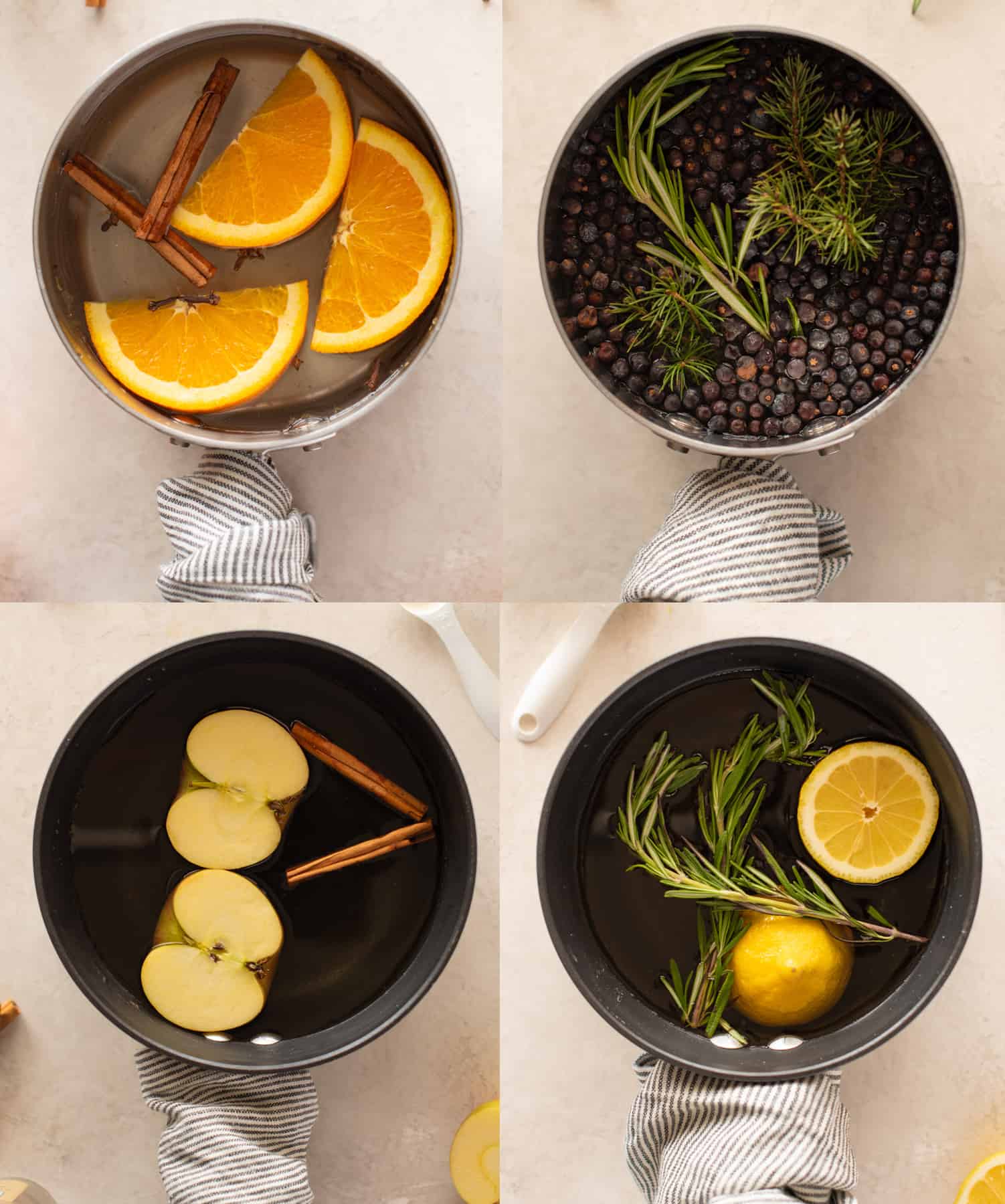
We've got four scents for you that I think you'll really love. We've got exact ratios down in the recipe below, but here's the gist:
- Apple Pie/Fall Flavors Stovetop Potpourri—Sliced apples, cinnamon sticks, vanilla
- Christmas Tree Stovetop Potpourri—Juniper berries, rosemary, pine needles
- Fresh and Clean Stovetop Potpourri—Lemon slices, vanilla, rosemary
- Cozy Christmas Stovetop Potpourri—Orange slices, cinnamon sticks, whole cloves
Can you reuse stovetop potpourri?
Yes! One of the beautiful things about stovetop potpourri is that you can keep simmering and refreshing it until you're ready to change scents. Top off the water as much as you need, and when the scent starts to fade a bit, just pop in a bit more of each ingredient. I've had the same pot of stovetop potpourri going for a week or more! I just shut it off and put a lid it on it when I go to bed, and then come back in the morning and fire it back up. When you're ready to change scents, just put the ingredients of the simmer pot in the compost, and refill the saucepan with your new ingredients. Easy peasy!
Make sure to stay safe, friends!
Make sure to keep your potpourri simmering (which means it's just barely bubbling, not boiling), and always turn off your stovetop potpourri when sleeping or leaving the house. Never let the stovetop potpourri get completely dry—that's a fire hazard—and add more water as the water evaporates. If you're going to be in another room, it's a good idea to set an alarm on your phone to make sure to check the potpourri regularly.
Can you give stovetop potpourri as gifts?
Yes! Stovetop potpourri makes a wonderful gift. Just package up the ingredients in a small basket or bag with a card of instructions. Make sure to keep the fruit whole for longer shelf life, and you can send vanilla beans instead of vanilla extract. You could also package it in a small saucepan or even an electric simmer pot for an extra special gift. Beautiful and festive!
More simple and natural ways to make your home smell good:
Stovetop Potpourri (4 Scents!)
Yield: 1 simmer pot
Active Time: 5 minutes
Total Time: 5 minutes
Difficulty: Easy
Swap out the heavy fragrance of store-bought air fresheners and instead fill your home with the all-natural smell of Stovetop Potpourri!
Materials
Fresh and Clean (Lemon-Rosemary)
- 1 lemon, sliced
- 2 teaspoons vanilla extract or 1 vanilla bean, halved
- 2 sprigs of fresh rosemary
- Water
Cozy Christmas (Orange-Cinnamon-Clove)
- 2 oranges or clementines, sliced
- 2 cinnamon sticks
- 5 whole cloves
- Water
Christmas Tree
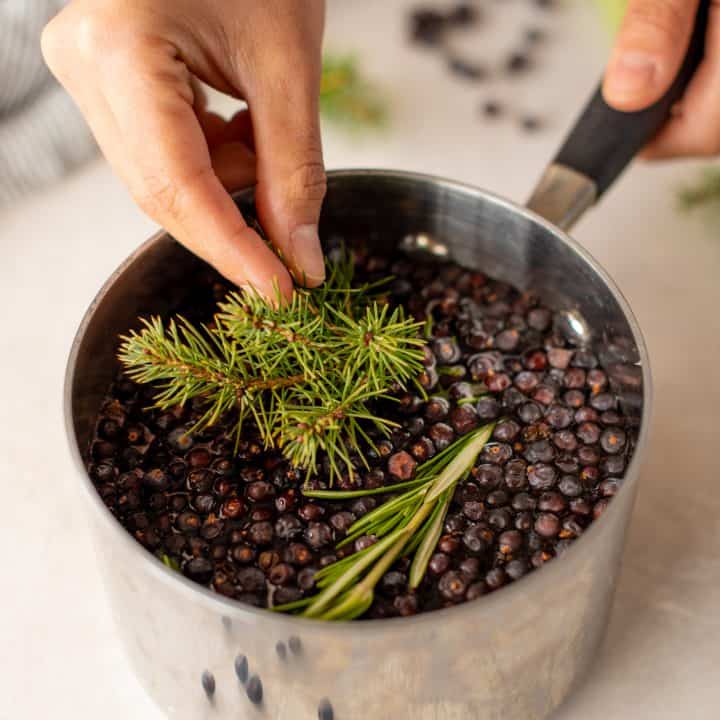
- 1/2 cup juniper berries
- 1 sprig fresh rosemary
- 2 sprigs fresh pine needles (or other evergreen)
- Water
Apple Pie
- 1 apple, sliced
- 2 cinnamon sticks
- 5 whole cloves
- 10 allspice berries
- 2 teaspoons vanilla extract or 1 vanilla bean, halved
- Water
Instructions
- Combine all ingredients in a pot, and cover with 1" of water. Bring to a boil, reduce heat, and simmer on the lowest setting on the stove.
- Add additional water as the water level drops. When scent starts to weaken, refresh with additional ingredients.
Notes
- To save overnight, remove from heat, cover with lid, and leave out at room temperature (I just keep mine on the stove). To restart in the morning, top off the water, bring to a boil, reduce heat, and simmer on the lowest setting.
Source: https://wholefully.com/stovetop-potpourri-homemade/
0 Response to "Orange Peel and Rosemary Stove Fragrance Easy Diy"
Post a Comment